Your next trip starts pre-filled
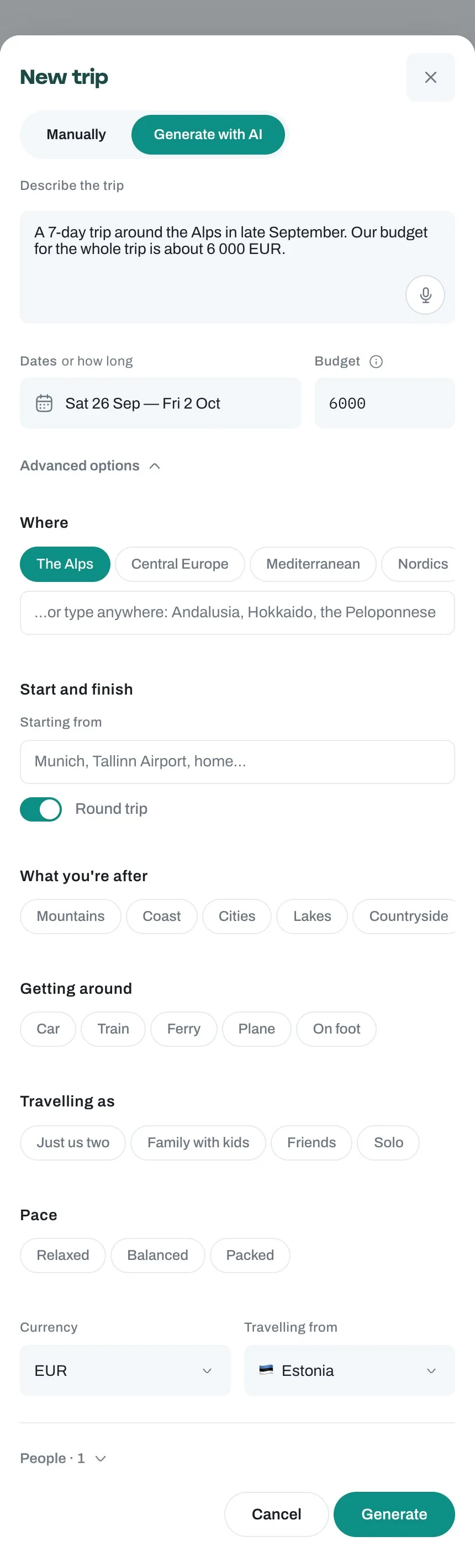
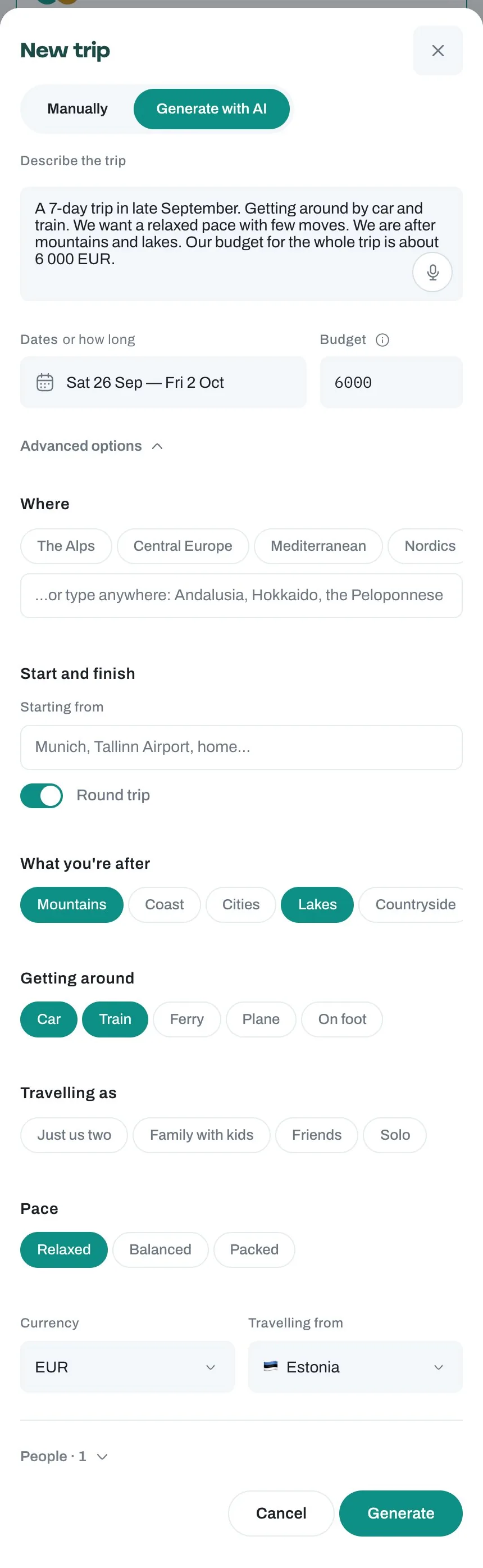
Pace, transport, the things you always pick — learned from your trips and already ticked when you open the planner. Marked, so you can see what was chosen for you, and untick it.
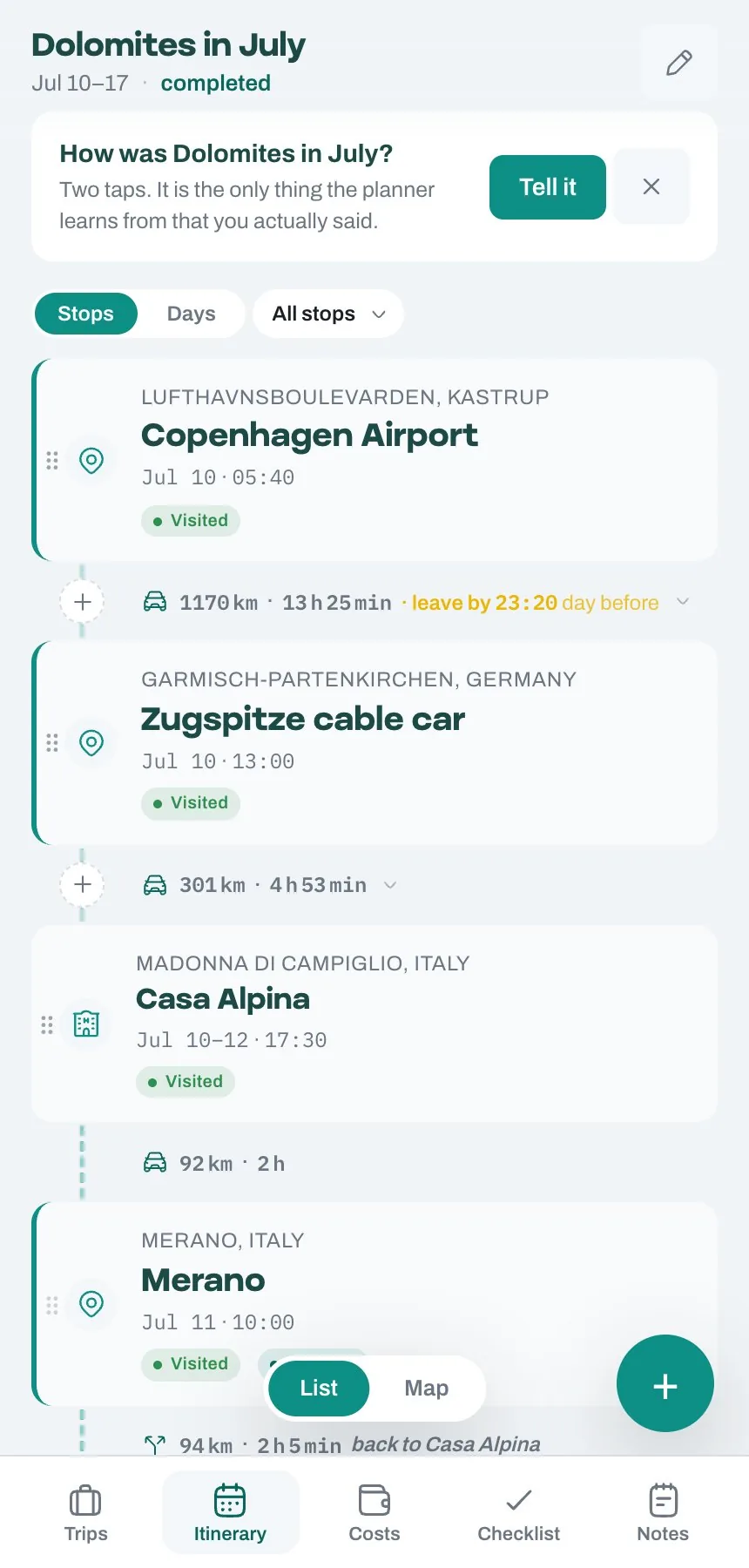
Say where you want to go — every day arrives drafted, routed and costed. And it learns how you travel, so the next trip starts already suited to you.
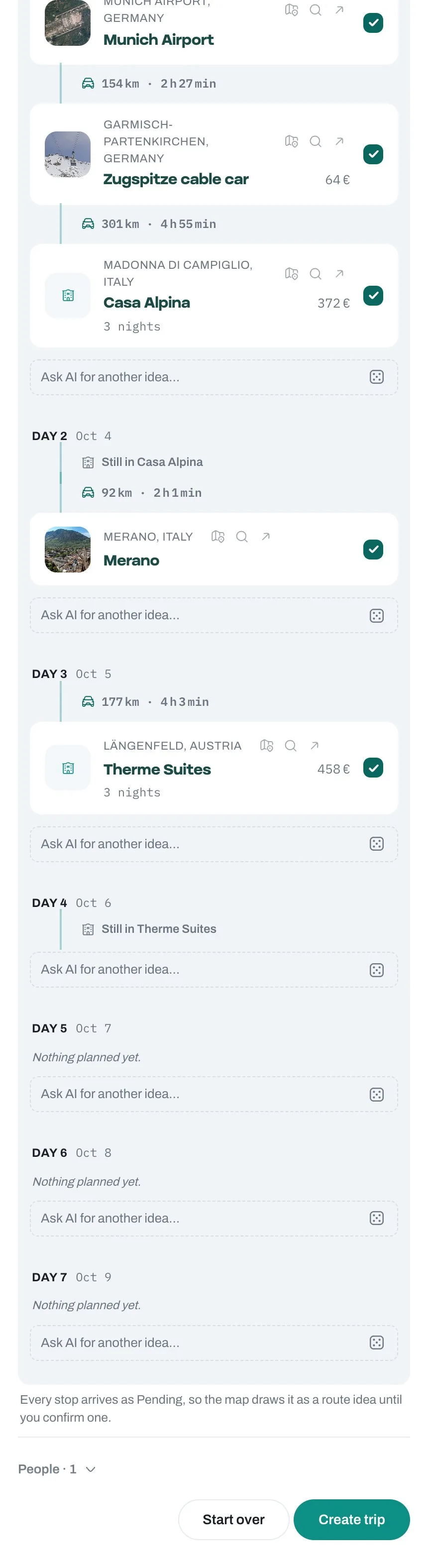
Every stop arrives as an idea — drop it, swap it, or ask for another. Nothing is booked until you book it. And most planners stop at the itinerary — this one remembers what you kept, and the next draft starts from it.
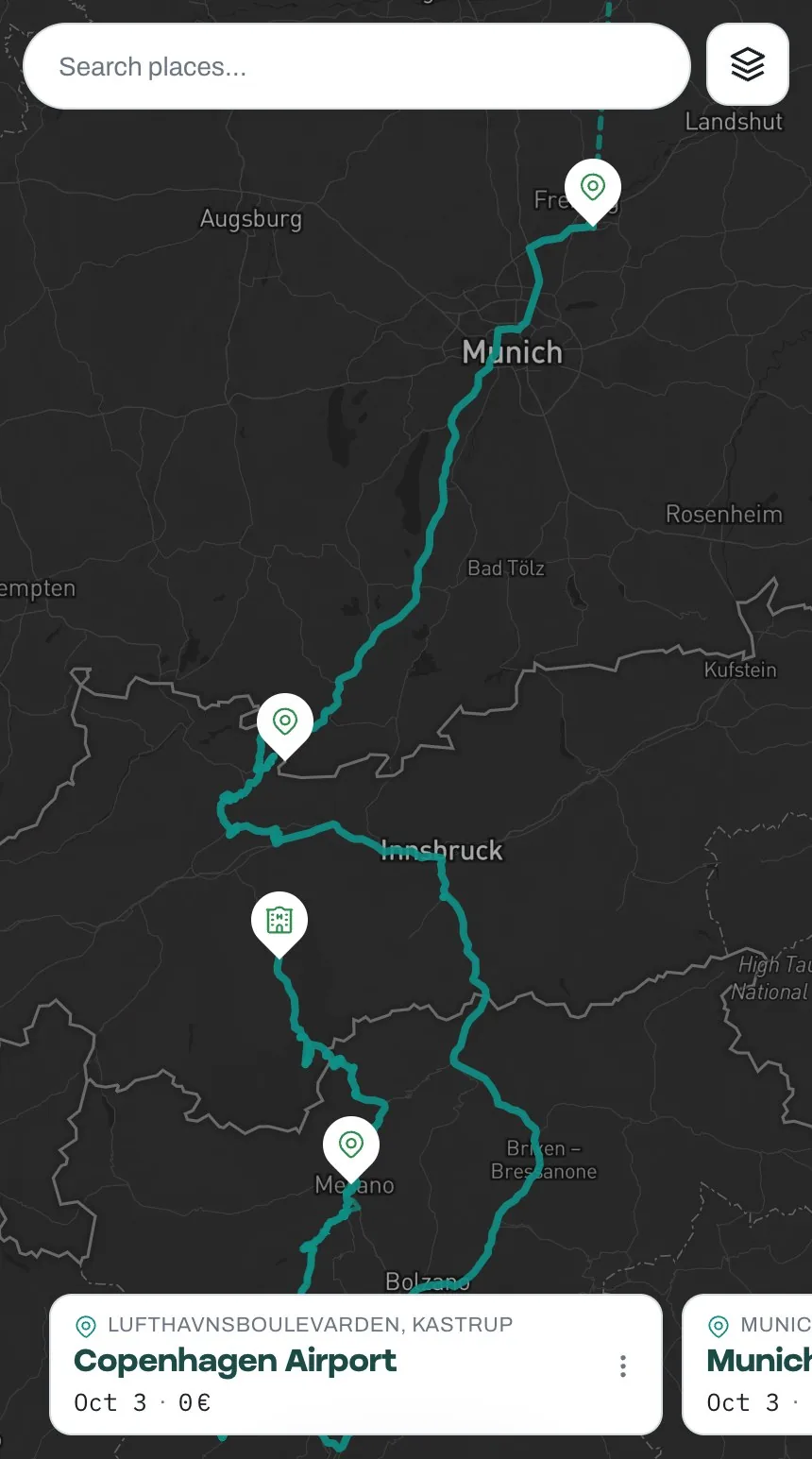
“A week in the Alps for two, hiking and thermal spas, starting from Munich.” The planner turns it into a day-by-day itinerary — real places, photographs, a route that makes sense on a map.
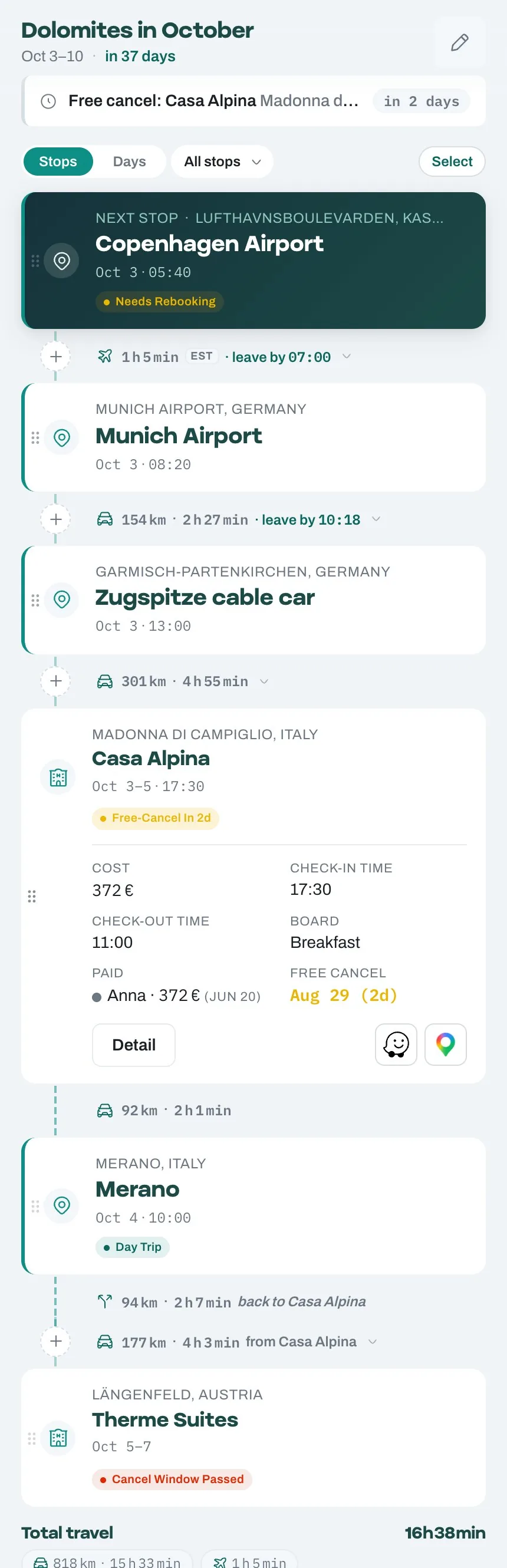
Untick what you don’t want. Ask for another idea on any day. Upload a booking PDF or a screenshot and the details file themselves. The costs split between exactly the people they belong to.
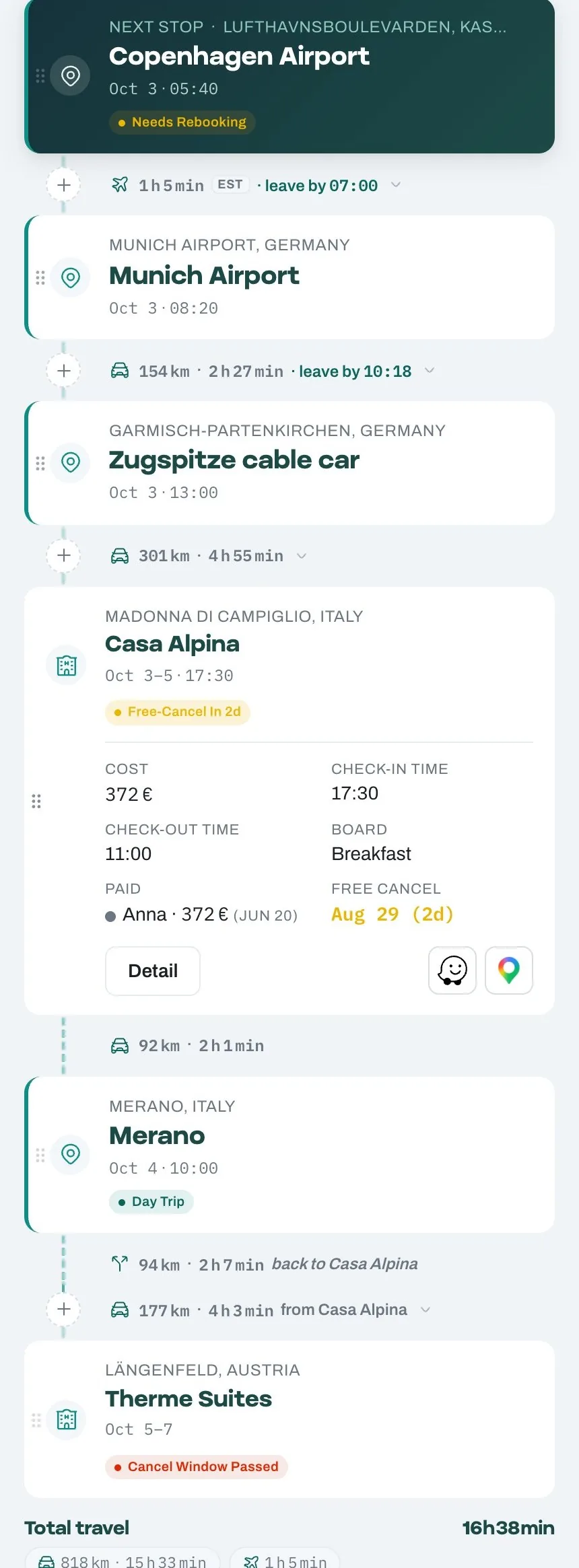
Leave-by times for every stop, deadlines flagged before they cost you money — and your next trip opens already knowing your pace and how you like to move.
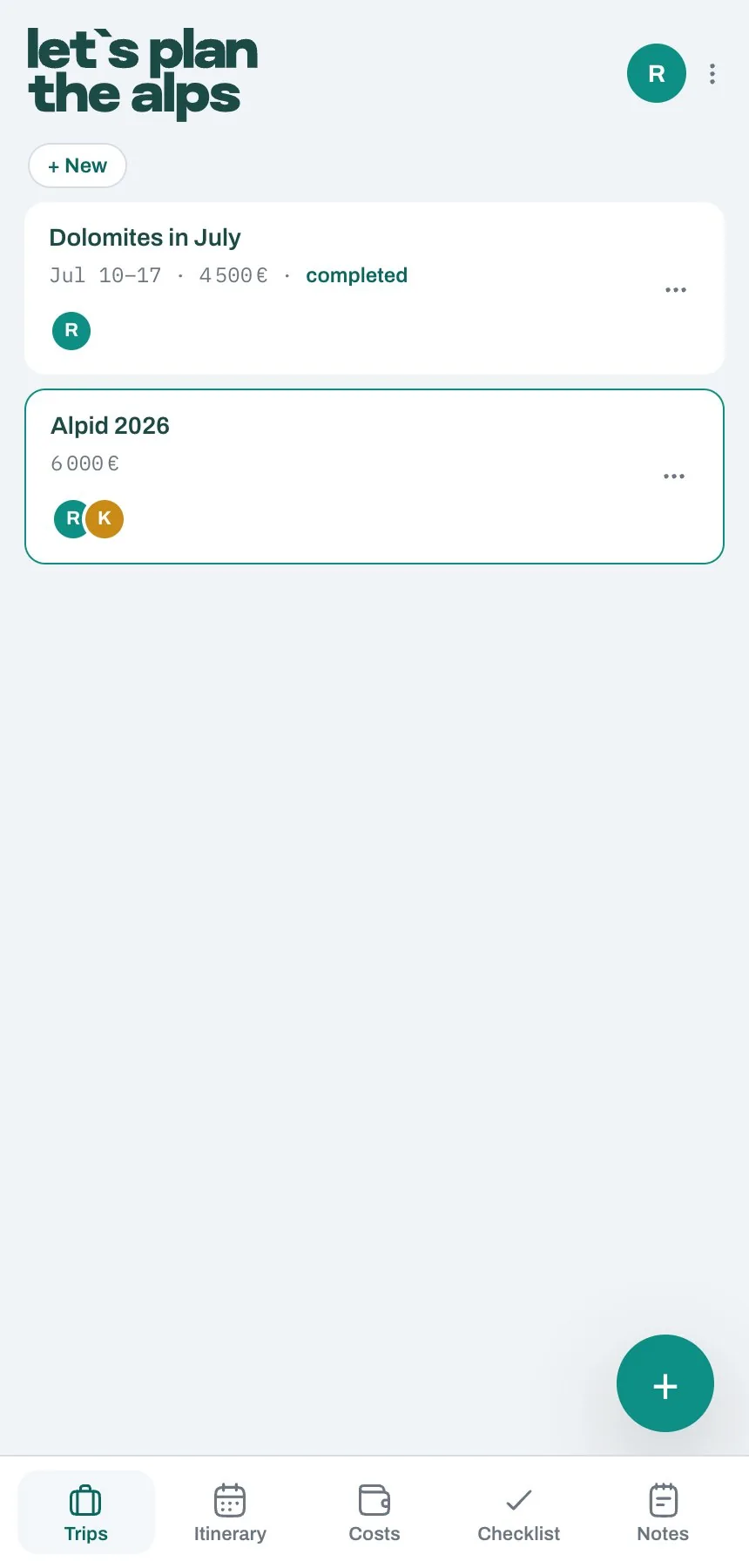
Every cost splits between exactly the people it belongs to. Balances update as payments land, and settling up is one transfer, not a spreadsheet.
Free-cancellation windows and scheduled card charges are watched — flagged in the app and emailed before they’re due, not after.
One figure for the whole party, measured against what’s actually confirmed — so “are we over?” has an answer at any moment.
Pace, transport, the things you always pick — learned from your trips and already ticked when you open the planner. Marked, so you can see what was chosen for you, and untick it.
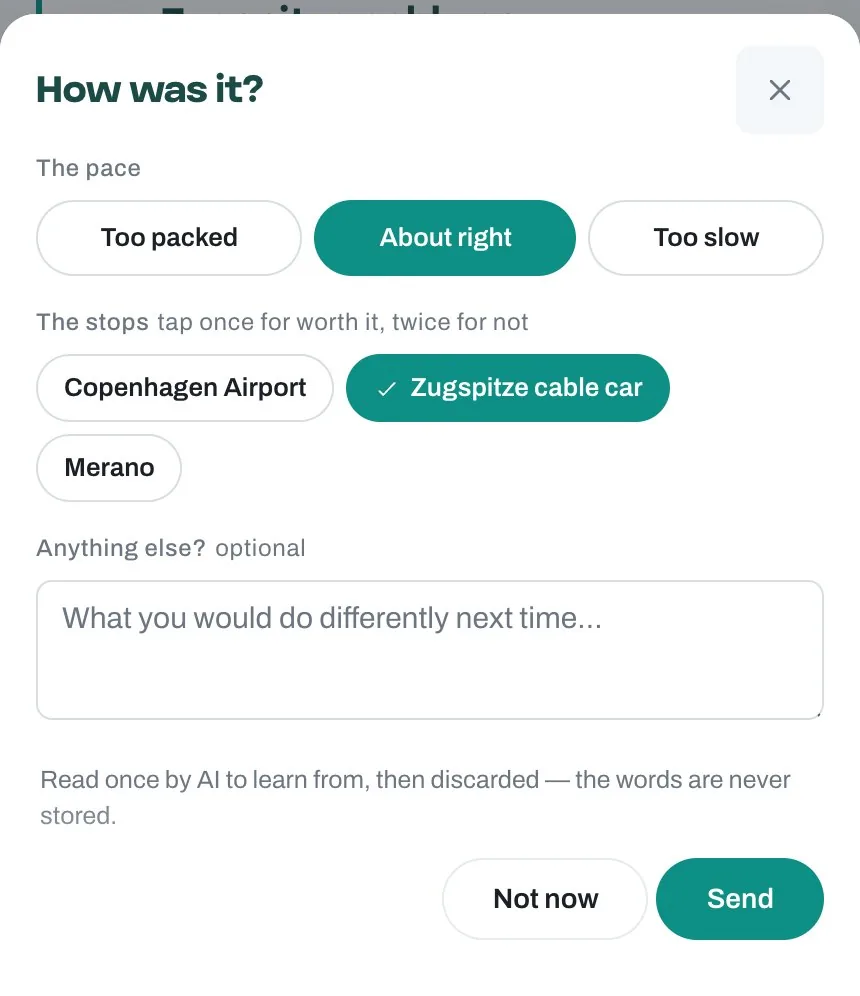

When you’re home it asks one question — what was great, what wasn’t. That’s the only thing it learns from that you actually said, and it makes the next plan sharper.


Restaurants at your price, days at your pace — every new plan is weighed against what you kept and what you dropped on the trips before it.


Early access is free — request an invite and try it properly. Creating your own trips will be a paid account once we open up: the AI that drafts them costs real money to run, and we’d rather charge for it than sell you or your data to anyone.
No. It runs in the browser — plan on the laptop, travel with the phone, it’s the same trip either way. Nothing to update, nothing on your home screen unless you want it there.
Yes — invite by email, and choose per person whether they can edit or just look. Costs split between whoever’s on the trip, and everyone sees the same plan, live.
They’re read once, by the AI, to pull out the dates, prices and reference numbers — and then the file is gone. The details land in your trip; the document itself is never stored.
Plan by length instead — “8 days”, no calendar. The itinerary thinks in Day 1, Day 2… and the moment you pick real dates, everything snaps onto them.
No — it plans. You book wherever you like, and the booking finds its way back in: forward the confirmation or drop in the PDF, and the details file themselves.
Drop a stop, swap it, or ask for another idea on the spot — times, routes and the budget re-flow around whatever you change.
Yes — pace, transport, the kind of places you keep. Your next trip opens pre-filled with your picks, marked so you can see and untick them.